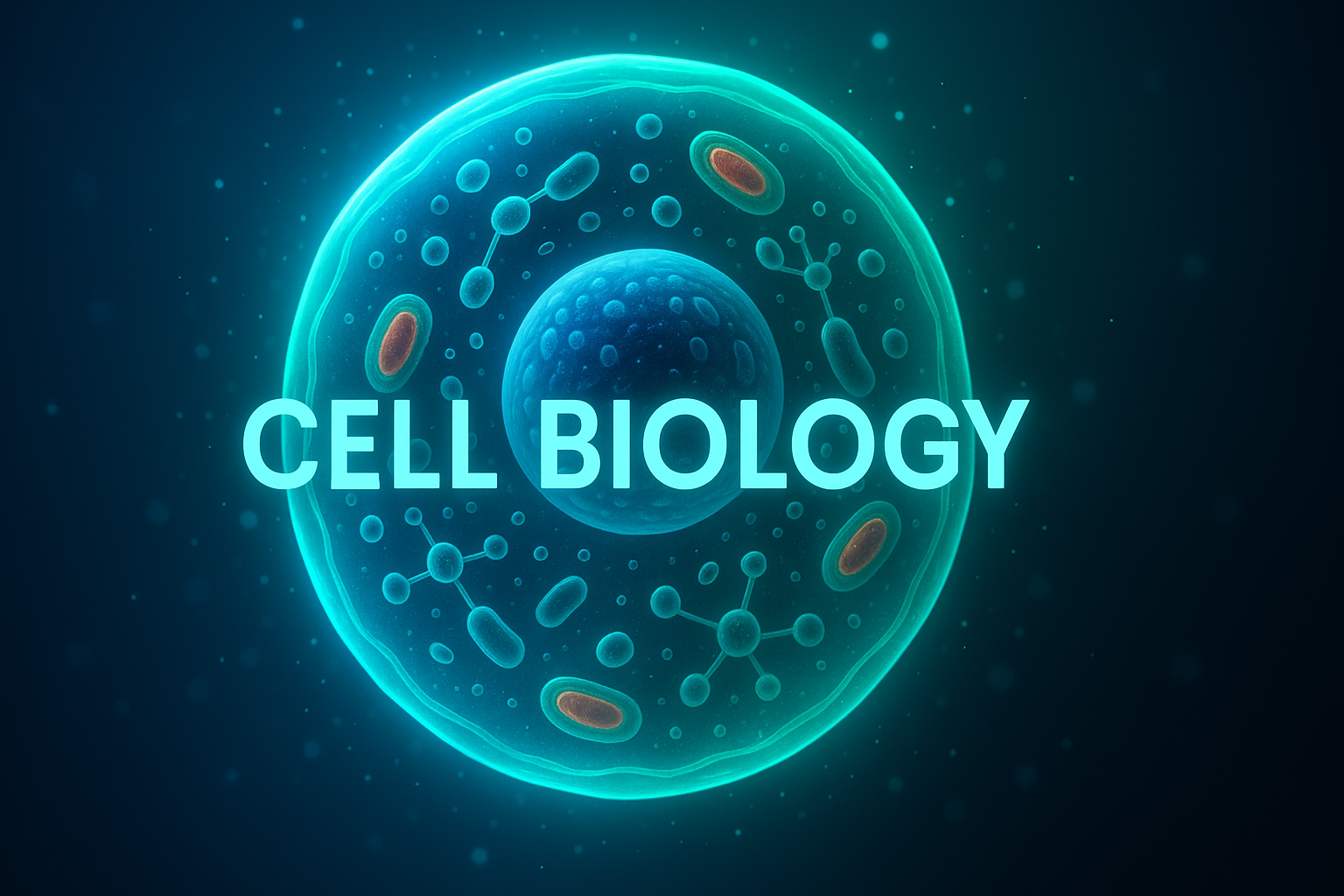
कोशिका जीवविज्ञान (Cell Biology in Hindi) | जीवविज्ञान नोट्स (हिन्दी)
कोशिका जीवविज्ञान जीवों की मूलभूत इकाई अर्थात् कोशिका (Cell) का अध्ययन है। यह विषय SSC, रेलवे, बैंक, राज्य स्तरीय परीक्षाओं तथा अन्य प्रतियोगी परीक्षाओं में अत्यंत महत्वपूर्ण है। इसमें कोशिका के प्रकार, संरचना, कोशिकांग (Organelles), कोशिका विभाजन, झिल्ली परिवहन तथा महत्वपूर्ण वस्तुनिष्ठ प्रश्न शामिल हैं।
1. कोशिका सिद्धांत (Cell Theory)
- सभी जीवों का निर्माण कोशिकाओं से होता है।
- कोशिका जीवन की संरचनात्मक एवं क्रियात्मक इकाई है।
- सभी नई कोशिकाएँ पहले से विद्यमान कोशिकाओं से उत्पन्न होती हैं।
- कोशिका में वृद्धि, श्वसन, प्रजनन एवं ऊर्जा परिवर्तन जैसी सभी जीवन क्रियाएँ होती हैं।
2. कोशिका के प्रकार
- प्रोकैरियोटिक कोशिका – स्पष्ट केन्द्रक नहीं होता। उदाहरण: जीवाणु (Bacteria), आर्किया।
- यूकैरियोटिक कोशिका – स्पष्ट केन्द्रक एवं झिल्लीयुक्त कोशिकांग पाए जाते हैं। उदाहरण: पौधे, जन्तु, कवक।
3. पादप कोशिका एवं जन्तु कोशिका में अंतर
| विशेषता |
पादप कोशिका |
जन्तु कोशिका |
| कोशिका भित्ति |
उपस्थित |
अनुपस्थित |
| रसधानी (Vacuole) |
एक बड़ी केंद्रीय |
छोटी या अनेक |
| हरितलवक (Chloroplast) |
उपस्थित |
अनुपस्थित |
| आकार |
निश्चित एवं नियमित |
अनियमित एवं लचीला |
| सेंट्रोसोम |
सामान्यतः अनुपस्थित |
उपस्थित |
4. प्रमुख कोशिकांग एवं उनके कार्य
| कोशिकांग |
संरचना |
मुख्य कार्य |
| केन्द्रक |
दोहरी झिल्ली |
डीएनए का संग्रह एवं कोशिका का नियंत्रण |
| माइटोकॉन्ड्रिया |
दोहरी झिल्ली, क्रिस्टी |
ATP का निर्माण (ऊर्जा उत्पादन) |
| हरितलवक |
थायलाकोइड एवं स्ट्रोमा |
प्रकाश संश्लेषण |
| एंडोप्लाज्मिक रेटिकुलम |
रफ एवं स्मूथ |
प्रोटीन एवं वसा का निर्माण |
| गोल्जी तंत्र |
चपटी थैलियाँ |
प्रोटीन का संशोधन एवं पैकेजिंग |
| राइबोसोम |
rRNA एवं प्रोटीन |
प्रोटीन संश्लेषण |
| लाइसोजोम |
पाचक एंजाइम |
कोशिका के अपशिष्ट का पाचन |
| रसधानी |
झिल्लीयुक्त |
भंडारण एवं तुर्गर दाब बनाए रखना |
| कोशिका झिल्ली |
फॉस्फोलिपिड द्विपरत |
चयनात्मक पारगम्यता |
| साइटोस्केलेटन |
सूक्ष्म तंतु |
आकार एवं गति प्रदान करना |
5. कोशिका झिल्ली एवं पदार्थों का परिवहन
- द्रव मोज़ेक मॉडल – कोशिका झिल्ली फॉस्फोलिपिड एवं प्रोटीन से बनी गतिशील संरचना है।
- निष्क्रिय परिवहन – विसरण (Diffusion), सुगम विसरण (Facilitated Diffusion), परासरण (Osmosis)।
- सक्रिय परिवहन – ATP की सहायता से सांद्रण प्रवणता के विरुद्ध पदार्थों का परिवहन।
- एंडोसाइटोसिस एवं एक्सोसाइटोसिस – बड़े कणों का कोशिका में प्रवेश एवं बाहर निकलना।
6. कोशिका के प्रमुख जैव-अणु
| जैव-अणु |
मूल इकाई |
मुख्य कार्य |
| कार्बोहाइड्रेट |
मोनोसैकराइड |
ऊर्जा प्रदान करना |
| प्रोटीन |
अमीनो अम्ल |
एंजाइम एवं संरचनात्मक कार्य |
| वसा (लिपिड) |
वसीय अम्ल एवं ग्लिसरॉल |
ऊर्जा संचय एवं झिल्ली निर्माण |
| न्यूक्लिक अम्ल |
न्यूक्लियोटाइड |
आनुवंशिक सूचना का संग्रह |
7. कोशिका चक्र एवं कोशिका विभाजन
- कोशिका चक्र = इंटरफेज (G₁, S, G₂) + M चरण।
- समसूत्री विभाजन (Mitosis) – दो समान पुत्री कोशिकाएँ बनती हैं।
- अर्धसूत्री विभाजन (Meiosis) – चार अगुणित कोशिकाएँ बनती हैं।
- समसूत्री विभाजन वृद्धि एवं ऊतक मरम्मत के लिए तथा अर्धसूत्री विभाजन लैंगिक प्रजनन के लिए आवश्यक है।
8. विशिष्ट कोशिकाएँ एवं स्टेम सेल
- उदाहरण – तंत्रिका कोशिका, लाल रक्त कोशिका, मांसपेशी कोशिका।
- स्टेम सेल – अविशिष्ट कोशिकाएँ जो विभिन्न प्रकार की कोशिकाओं में परिवर्तित हो सकती हैं।
9. त्वरित तुलना
| कोशिकांग |
पौधा/जन्तु |
मुख्य कार्य |
| कोशिका भित्ति |
केवल पौधों में |
सुरक्षा एवं आकार |
| हरितलवक |
केवल पौधों में |
प्रकाश संश्लेषण |
| बड़ी रसधानी |
मुख्यतः पौधों में |
भंडारण |
| सेंट्रोसोम |
मुख्यतः जन्तुओं में |
स्पिंडल निर्माण |
| लाइसोजोम |
मुख्यतः जन्तुओं में |
अंतःकोशिकीय पाचन |
10. त्वरित पुनरावृत्ति
- कोशिका जीवन की मूल इकाई है।
- केन्द्रक में DNA पाया जाता है।
- माइटोकॉन्ड्रिया ऊर्जा का उत्पादन करता है।
- हरितलवक में प्रकाश संश्लेषण होता है।
- समसूत्री विभाजन से 2 समान कोशिकाएँ तथा अर्धसूत्री विभाजन से 4 अगुणित कोशिकाएँ बनती हैं।
20 महत्वपूर्ण वस्तुनिष्ठ प्रश्न
- प्रोकैरियोटिक कोशिका में क्या नहीं पाया जाता है? — केन्द्रक
- ATP का निर्माण किस कोशिकांग में होता है? — माइटोकॉन्ड्रिया
- प्रकाश संश्लेषण कहाँ होता है? — हरितलवक
- कोशिका झिल्ली का मुख्य घटक क्या है? — फॉस्फोलिपिड द्विपरत
- राइबोसोम का मुख्य कार्य क्या है? — प्रोटीन संश्लेषण
- गोल्जी तंत्र का मुख्य कार्य क्या है? — प्रोटीन का संशोधन एवं पैकेजिंग
- कौन-सा विभाजन दो समान पुत्री कोशिकाएँ बनाता है? — समसूत्री विभाजन
- अर्धसूत्री विभाजन के बाद कितनी कोशिकाएँ बनती हैं? — चार
- परासरण (Osmosis) किसका विसरण है? — जल का
- सक्रिय परिवहन में किस ऊर्जा का उपयोग होता है? — ATP
- पादप कोशिका की बड़ी रसधानी का मुख्य कार्य क्या है? — भंडारण एवं तुर्गर दाब बनाए रखना
- आनुवंशिक पदार्थ का मुख्य अणु कौन-सा है? — DNA
- लाइसोजोम का मुख्य कार्य क्या है? — कोशिकीय पाचन
- मांसपेशियों के संकुचन में कौन-सा साइटोस्केलेटन भाग कार्य करता है? — सूक्ष्म तंतु (एक्टिन)
- कोशिका झिल्ली की संरचना किस मॉडल द्वारा समझाई जाती है? — द्रव मोज़ेक मॉडल
- वसा निर्माण एवं विषहरण का कार्य कौन करता है? — स्मूथ एंडोप्लाज्मिक रेटिकुलम
- स्तनधारियों की कौन-सी कोशिका में केन्द्रक नहीं होता? — लाल रक्त कोशिका
- यूकैरियोटिक कोशिका में ट्रांसक्रिप्शन कहाँ होता है? — केन्द्रक
- DNA का प्रतिकृति निर्माण कोशिका चक्र के किस चरण में होता है? — S चरण
- स्रावी कोशिकाओं में कौन-से कोशिकांग अधिक विकसित होते हैं? — रफ ER एवं गोल्जी तंत्र
निष्कर्ष: कोशिका जीवविज्ञान जीव विज्ञान का सबसे महत्वपूर्ण आधार है। यदि आप कोशिकांगों के कार्य, कोशिका विभाजन, झिल्ली परिवहन तथा जैव-अणुओं को अच्छी तरह समझ लेते हैं, तो SSC, रेलवे, बैंक तथा अन्य प्रतियोगी परीक्षाओं में इस विषय से आने वाले अधिकांश प्रश्न आसानी से हल कर सकते हैं।
नोट: यह नोट्स SSC, रेलवे, बैंक एवं अन्य एकदिवसीय प्रतियोगी परीक्षाओं के लिए तैयार किए गए हैं।